Teknik Belgeler
Özellikler
Marka
MicrochipÜrün Tipi
LED Sürücü IC
Giriş Gerilimi Tipi
AC
Kısma Çalışması
Faz
Maksimum Çıkış Gücü
2W
Montaj Tipi
Deliğe Takılan
Paket Tipi
DFN
Pimlerin Sayısı
10
Maksimum Çıkış Gerilimi
320V
Minimum Çalışma Sıcaklığı
-40°C
Maksimum Çalışma Sıcaklığı
125°C
Uzunluk
3mm
Yükseklik
1mm
Standartlar/Onaylar
RoHS
Seri
CL8
Minimum Çıkış Gerilimi
90V
Otomotiv Standardı
NO

Ürün Ayrıntıları
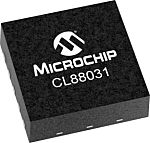
The Microchip CL88031 sequential linear LED Driver IC is designed to provide LED power from a utility voltage input. It operates on 90V to 320V voltage range. A string of series LEDs is tapped at six locations, linear current regulators sink current at each tap through a single control point and are sequentially turned on and off. High efficiency is achieved by shutting off upstream regulators when downstream regulators achieve regulation. This makes controlling overall input current easier than trying to control multiple current paths by tracking the input sine wave voltage. It uses a self-commutation technique using only the tap currents that inherently provides smooth transitions from one regulator to the next, without relying on tap voltages or the rectified AC to coordinate the transitions.
Stok bilgileri geçici olarak kullanılamıyor.
Teklif İsteyiniz
Each (On a Reel of 3300) (KDV Hariç)
3300
Teklif İsteyiniz
Each (On a Reel of 3300) (KDV Hariç)
Stok bilgileri geçici olarak kullanılamıyor.
3300
Teknik Belgeler
Özellikler
Marka
MicrochipÜrün Tipi
LED Sürücü IC
Giriş Gerilimi Tipi
AC
Kısma Çalışması
Faz
Maksimum Çıkış Gücü
2W
Montaj Tipi
Deliğe Takılan
Paket Tipi
DFN
Pimlerin Sayısı
10
Maksimum Çıkış Gerilimi
320V
Minimum Çalışma Sıcaklığı
-40°C
Maksimum Çalışma Sıcaklığı
125°C
Uzunluk
3mm
Yükseklik
1mm
Standartlar/Onaylar
RoHS
Seri
CL8
Minimum Çıkış Gerilimi
90V
Otomotiv Standardı
NO
Ürün Ayrıntıları
The Microchip CL88031 sequential linear LED Driver IC is designed to provide LED power from a utility voltage input. It operates on 90V to 320V voltage range. A string of series LEDs is tapped at six locations, linear current regulators sink current at each tap through a single control point and are sequentially turned on and off. High efficiency is achieved by shutting off upstream regulators when downstream regulators achieve regulation. This makes controlling overall input current easier than trying to control multiple current paths by tracking the input sine wave voltage. It uses a self-commutation technique using only the tap currents that inherently provides smooth transitions from one regulator to the next, without relying on tap voltages or the rectified AC to coordinate the transitions.