Teknik Belgeler
Özellikler
Marka
RS ProÜrün Tipi
ESD Bottle
Dispenser Tipi
Bottle
Dağıtıcı
Evet
Kapasite
227ml
Renk
Mavi
İletkenlik
İletken Olmayan
Antistatik
Evet
Temiz Oda
Evet
Standartlar/Onaylar
ANSI/ESD S20.20
Ürün Ayrıntıları
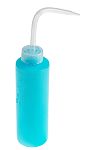
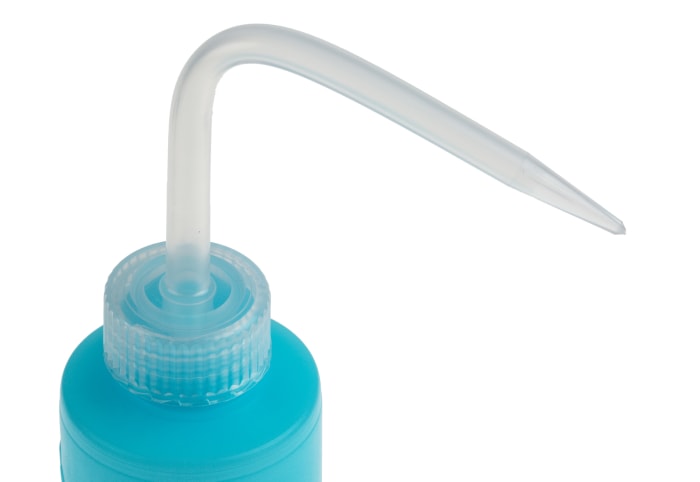
The RS PRO ESD (Electrostatic Discharge) wash bottle is a specialised laboratory tool designed to dispense liquids in a controlled manner while minimising the risk of electrostatic discharge. An ESD wash bottle is essential in environments where electrostatic discharge can damage sensitive electronic components or disrupt processes, such as in electronics manufacturing, clean rooms, and laboratories dealing with static-sensitive materials.
Our ESD bottle can dissipate a static charge of ±5000V in less than two seconds at 40% relative humidity. Chemically inert, it will not react with solvents like TCE or alcohol. The pH of de-ionised water solutions remained unchanged after a seven-day test period, and no colour or physical changes were observed in any of the solvents tested.
Stok bilgileri geçici olarak kullanılamıyor.
Teklif İsteyiniz
1
Teklif İsteyiniz
Stok bilgileri geçici olarak kullanılamıyor.
1
Teknik Belgeler
Özellikler
Marka
RS ProÜrün Tipi
ESD Bottle
Dispenser Tipi
Bottle
Dağıtıcı
Evet
Kapasite
227ml
Renk
Mavi
İletkenlik
İletken Olmayan
Antistatik
Evet
Temiz Oda
Evet
Standartlar/Onaylar
ANSI/ESD S20.20
Ürün Ayrıntıları
The RS PRO ESD (Electrostatic Discharge) wash bottle is a specialised laboratory tool designed to dispense liquids in a controlled manner while minimising the risk of electrostatic discharge. An ESD wash bottle is essential in environments where electrostatic discharge can damage sensitive electronic components or disrupt processes, such as in electronics manufacturing, clean rooms, and laboratories dealing with static-sensitive materials.
Our ESD bottle can dissipate a static charge of ±5000V in less than two seconds at 40% relative humidity. Chemically inert, it will not react with solvents like TCE or alcohol. The pH of de-ionised water solutions remained unchanged after a seven-day test period, and no colour or physical changes were observed in any of the solvents tested.