Teknik Belgeler
Özellikler
Marka
SickÜrün Tipi
Fiber Optik Sensörü
Fiber Optik Tipi
Glass
Muhafaza Malzemesi
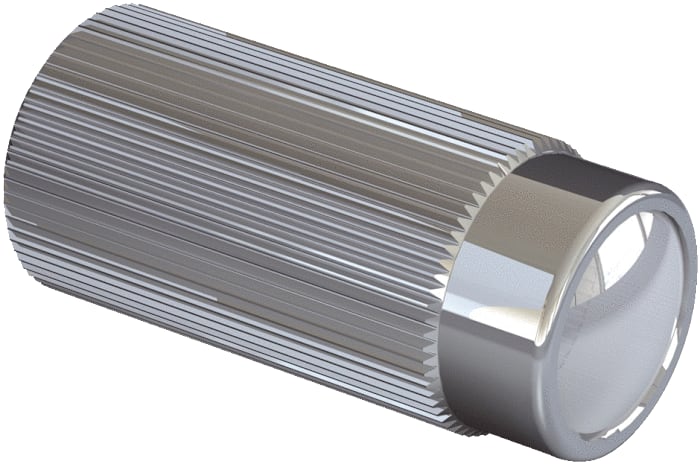
Nikel Kaplamalı Pirinç
Minimum Çalışma Sıcaklığı
-40°C
Maksimum Çalışma Sıcaklığı
350°C
Seri
LL3
Standartlar/Onaylar
RoHS
Menşe
Japan
Ürün Ayrıntıları
For any application oriented sensor solution, a suitable fibber optic cable must be chosen. At SICK, the broad range of fibber optic cables made from plastic and glass fibbers permits optimal automation solutions. This applies in particular to tasks for which the fibber optic cable requires application-specific adaption, where flexible cable installation is crucial, where high temperatures prevail, or a particular material compatibility is important. While the fibbers of plastic fibber optic cables are characterized, among other things, by the smallest of bend radii and maximum flexibility, and can also be shortened to any length, the glass fibber optic cables are more chemically resistant and suitable for a higher temperature range.
The wide variety of end sleeve options or individual special sleeves enable virtually any installation possibility. Depending on the application, the fibber optic cable's protective cladding can be made from plastic, metal, or Teflon for exposure to aggressive chemicals.
Stok bilgileri geçici olarak kullanılamıyor.
7.342,44 TL
7.342,44 TL Each (KDV Hariç)
8.810,93 TL
8.810,93 TL Each KDV Dahil
1
7.342,44 TL
7.342,44 TL Each (KDV Hariç)
8.810,93 TL
8.810,93 TL Each KDV Dahil
Stok bilgileri geçici olarak kullanılamıyor.
1
Teknik Belgeler
Özellikler
Marka
SickÜrün Tipi
Fiber Optik Sensörü
Fiber Optik Tipi
Glass
Muhafaza Malzemesi
Nikel Kaplamalı Pirinç
Minimum Çalışma Sıcaklığı
-40°C
Maksimum Çalışma Sıcaklığı
350°C
Seri
LL3
Standartlar/Onaylar
RoHS
Menşe
Japan
Ürün Ayrıntıları
For any application oriented sensor solution, a suitable fibber optic cable must be chosen. At SICK, the broad range of fibber optic cables made from plastic and glass fibbers permits optimal automation solutions. This applies in particular to tasks for which the fibber optic cable requires application-specific adaption, where flexible cable installation is crucial, where high temperatures prevail, or a particular material compatibility is important. While the fibbers of plastic fibber optic cables are characterized, among other things, by the smallest of bend radii and maximum flexibility, and can also be shortened to any length, the glass fibber optic cables are more chemically resistant and suitable for a higher temperature range.
The wide variety of end sleeve options or individual special sleeves enable virtually any installation possibility. Depending on the application, the fibber optic cable's protective cladding can be made from plastic, metal, or Teflon for exposure to aggressive chemicals.